Monday, June 15, 2026

A New Puppy!

We have a new puppy. She’s a seven-month-old yellow Lab we’re calling Jadis**. She’s also 80 lbs (36 kg). 

Basically, she’s like a two-year-old who weighs 80 lbs.

 This is what my morning is like:

 I walk downstairs.

 Jadis: Alpha Female (me), I am so, so happy to see you!! I will run to you with all the strength in my body so you will know how much I love you.

 Me: oofff. plop.

 Jadis (stream of consciousness): Why are you on the floor? Are you sad? I will lick your face. Ooo, your pajama top smells nice. I will taste it with my tongue. Maybe we can play tug-of-war with your shirt. That would be fun. See, I can pull your shirt hard. Oh, it ripped. You should buy a new one. Can I have the old one?

 Me: I need coffee. Lots of coffee.

Okay, this is not a me-in-my-pajamas-getting-licked-to-death, but this is pretty much the same thing. Me getting lots of doggy love.  

 **For those of you who haven’t read The Chronicles of Narnia’s The Magician’s Uncle, Jadis is the evil queen. I love irony, so our sweet girl carries a weighted name. (Our last dog was a female black Lab I named Jezebel. I just can’t help myself…)


Monday, June 23, 2025

Uncovering Secrets: How Writers, Readers and Film Buffs Discover the “More” in a Story

When actors are asked how they avoid depicting characters as clichés, many respond, “It’s there in the story.” When writers want to develop their characters, they often reread what they've written to uncover opportunities that already exist in the work.

When I write a scene, I begin by trying to get all my thoughts onto the page. While doing this, I can’t view the scene from all perspectives at once—all the people present plus the setting, which usually functions as a character. It’s only after time has elapsed that I can go back and observe the scene from a bird's eye view. It’s like turning the cylinder of a kaleidoscope and seeing a different image, a different perspective, with every turn.

The same is true for movies. When I view a film I love but haven't seen in a while, I find elements I missed the first time. This isn’t the same as aspects of the movie I didn't remember. These are actually things I couldn’t see before because no one can see everything the first time. Only by viewing the story with the benefits of time, distance and a fresh perspective do I notice what I didn't before.

For writers, distance is important because it not only gives us time away but also an emotional buffer so that when we return to the story, we’re looking for more than what we need to fix. We’re looking for the story to speak to us, tell us what it wants to be now. In essence, we’re going back in order to discover what the story already contains so that we can use these elements to deepen individual aspects of the work and the work overall.

One way writers deepen their work is to ask questions of the characters. (I thought this was weird the first time I heard it, too.) The questions usually take three forms. What are you not telling me (the writer)? What are you not telling the other characters in the scene? What are you not telling yourself?

 It’s in these liminal spaces that writers often find deep truths about the theme of a story, what it’s really about. We also discover elements of our characters that make them fully realized, individual, memorable. Similar to all conversations, an added benefit of asking questions is that we get at the underlying story elements organically, without imposing anything on the work. Rather, we enable what’s already there to speak.

This doesn't mean every character is developed to the same degree. Neither does it mean every character is good. What it means is that they’re more true to life because in getting at who they really are, we enable dimensionality and layers. This is the complexity actors aim for when portraying a character. Paraphrasing Konstantin Stanislavski, we can learn a lot from our cousins the actors, when writing, reading, or watching a film.

So the next time you go back to a novel or film you love, look for the hidden gems. Pay attention to what you're seeing. Not to what you remember. But what is actually in front of you. And don't discount those things that don't seem to fit. If they’re there, they have a place in the story, just as they do in everyday life.


Adele Annesi’s bestselling cultural heritage novel is What She Takes Away (Bordighera Press, 2023). Adele is also a curator for the Ridgefield Independent Film Festival. Her MFA in creative writing is from Fairfield University, and her long-running blog for writers is Word for Words. Adele’s podcast is Adele Annesi on Writing.


Friday, May 30, 2025

Lace Cap Hydrangea

 This beauty blooms underneath the deep shadow of a saucer magnolia. It always reminds me to slow down and not miss the hidden beauties in life.


Friday, January 24, 2025

Brrr! So Cold!


The pond frozen and dusted with snow. 

(I'm so thankful after I take the photo, I can run back into a cozy house. I'm very tempted to stand on the ice and see if it will hold me up. But the thought of plunging into deep, icy water keeps my feet on frozen ground.)

Wednesday, January 8, 2025

Ice Storm

 The other day, we had snow, rain, and ice. Thankfully, I didn't have to venture out and could enjoy the ice, captured by the photo on the crepe myrtle.


Thursday, December 19, 2024

Book Review: My Parents' Marriage by Nana Ekua Brew-Hammond


I heard Nana read aloud a passage from My Parents' Marriage in a writing group I belong to, and my first thoughts were “The writing is so beautiful” and “I have to read this novel.” When the novel was published, I read it quickly because the plot was engrossing and the writing lyrical.

One theme in the novel is plural marriage. Because I know several women who have had their lives affected by plural marriage, I wanted to find out how Nana handled it in her book. She explored the pain and reverberating effects of plural marriages on the wives and their children with deftness and compassion. In the end, I enjoyed this novel and I came away from it a changed person.

A five-star read.

 Here’s the novel’s blurb:

 Determined to avoid the pain and instability of her parents’ turbulent, confusing marriage, Kokui marries a man far different from her loving, philandering, self-made father—and tries to be a different kind of wife from her mother.

 But when Kokui and her husband leave Ghana to make a new life for themselves in America, she finds history repeating itself. Her marriage failing, she is called home to Ghana when her father dies. Back in her childhood home, which feels both familiar and discomforting, she comes to realize that to exorcize the ghosts of her parents’ marriage she must confront them to enable her healing.

 Tender and illuminating, warm and bittersweet My Parents’ Marriage is a compelling story of family, community, class, and self-identity from an author with deep empathy and a generous heart.

Friday, December 6, 2024

Snow!


Earlier this week, I woke up to beauty on the other side of my bedroom window. 
(As former New Englanders, we love the snow and don't mind it doesn't happen too often.)


Thanksgiving Day! We didn't have any children or grandchildren home for the holiday--they're coming at Christmas. But we did have a lovely mix of relatives and people who feel like relatives. 

Friday, November 29, 2024

Book Review: I Worked Hard on That!

I've read a LOT of children's books over the years—everything from Tikki Tikki Tembo to The Stinky Cheese Man to Dr. Suess’s poem “The Pale Green Pants.” So, I thought there weren't any new ideas left in children’s books. But Robyn Wall proved me wrong. Her new children’s book I Worked Hard on That! takes the reader on a delightful journey with a spider named Kiara as she spins her webs and learns about beauty and creativity. 

When I began writing, I wish I’d known how the journey of creativity goes. How each experiment in making something new leads you on an exploration that hones your skills and voice. But don’t think the creativity journey is only for writers and artists. The same principles apply to writing a mathematics proof, programming, even engineering.

And  I must mention the illustrations by A.N. Kang are gorgeous—they tell the story in pictures as Kiara’s webs grow more beautiful along the way.  

 I’d encourage you to pick up this book for a child you love. Or, buy it for yourself--you’ll love it. 

Wednesday, November 20, 2024

Autumnal Flowers


I love autumn flowers. They are bright and beautiful when most plants have gone to sleep. When the trees follow suit, the air is pink. A hint of the spring to come. (These are blooming in my garden.)


Tuesday, May 21, 2024

Ehlers-Danlos Syndrome Awareness

 May is Ehlers-Danlos Syndrome Awareness Month. As someone with this rare genetic disease, I want to do my part so more people are aware of it. I hope someone will see these photos and say, "Hey, I can do that" and won't wait decades, getting sicker and sicker, before they are diagnosed.

This is one of many EDS "party tricks."
If you cover my pants with your hand, my head looks like it's on backward.

Cute EDS Awareness t-shirt.

This is the EDS "gang sign.
Take your thumb and touch your forearm


Friday, June 9, 2023

Book Review, What She Takes Away


 What She Takes Away is a heart-wrenching, debut novel, which explores the warp and weft of the lives of Gia and her estranged family in the village of Castel Barberini, when she returns to Italy for Milan’s Fashion Week.

As I read the novel, I was impressed with the novel’s pacing, character development, and artistry. I was transported by the Italian setting, which is so integral to the plot and characters that this story could not exist in any other time or place.

Ms. Annesi adds another dimension to her novel. An artisan fabric that weaves itself into all aspects of the plot, becomes not only a metaphor for the characters’ growth, but a character itself. It is only as the shuttle interlaces people in its web that we see the beautiful couture silk of Gia’s dress and life.

Highly recommended!  Click here to see the novel on Amazon.


Thursday, May 25, 2023

The What, Why, and Wherefore of Autofiction


Over the past decade, Connie and I have shared our lives and stories, often through our Wellspring Writers fellowship. Not surprisingly, life-based stories also make their way into writing. When more than half of a story and/or the critical plot points and characters in a work of fiction are not only based on real life but are actually part of real life, that’s autofiction. In this post, we’ll consider these oft-asked questions on the genre:

  •  What is autofiction

  • Why do writers choose the genre?

  • How can writers select and transform important life events, turning points, and discoveries into stories?

Autofiction usually is described as a combination of autobiography and fiction. Although this makes the term easy to remember, it’s more accurate to equate the nonfiction aspect with memoir. The main reason is that where autobiography usually covers a person’s entire life, memoir typically focuses on critical aspects of the person’s life, or a segment of it or a running theme that ties selected events together. Regardless of how autofiction is defined, there are practical reasons why writers work in the genre.

 Most people go through a number of seminal events and turning points throughout their lives, with epiphanies along the way—moments where a sudden flash of insight illuminates the writer’s understanding of herself, her world and the people around her. These elements often become part of stories in a natural way. For example, if we’re writing a scene where the main character moves from one part of the world to another and we’ve done the same, we’ll instinctually draw on our experience to write this section of the story. What makes the segment autofiction is when what happened to the character leading up to the move, the realities of the move itself, and what results afterward (including flashes of insight into what it means to undergo a major shift in geography, externally and internally) forms the bulk of that section of the story. We’ve seen that poor (or fortunate) soul who’s moving halfway around the world, and she is us.

 Writers also write autofiction because they want to revisit certain life events, changes and discoveries in order to better understand their lives and the people in them, and convey what they’ve learned in the form of story. This is especially true when there’s a particular theme involved, such as what it means to have a dual heritage. The underlying principal is what Vivian Gornick refers to in The Situation and the Story, on the art of personal narrative. “Every work of literature has both a situation and a story. The situation is the context or circumstance … the story is the emotional experience that preoccupies the writer: the insight, the wisdom, the thing one has come to say [about the circumstance].” Here, the writer has gone through something he wants to recall, explore and reveal, and has come to the written page to speak of it in a way worth remembering.

 So how does a writer transform life into stories? In reality, most writers, especially those who have been writing for a while, have an innate longing to explore some key event in their lives. It could be a move, career change, or life change. It could be something they’ve always wanted to do but haven’t been able to. Taking time to look back is an important step in deciding which aspects of life to cover. Even more important is “why”. What is it that makes the event, turning point or discovery worth writing about, worth spinning out an entire story for? The answer usually has to do with how much of an impact the event had on the writer. If it made a lasting impression on her, it could have the same effect on readers.

 My new novel, What She Takes Away (Bordighera Press, May 2023), is a work of autofiction. Set largely in Italy, the story is based mostly on events in my life and my mother’s, and the lives of her family. The actualities, especially the discoveries, were worth writing about because they shaped our lives. And if they shaped our lives, they’ll likely have impact the reader’s life. Isn’t that what the best stories aim to do?

The weaver’s shuttle of story turns in What She Takes Away when aspiring fabric designer Gia Falcini receives a gift from her estranged father in Italy that sparks a journey to his hillside village and new stepfamily, the country’s style capital and a rare local textile mill that could shred Gia's aspirations or offer a legacy worth taking away.


Adele Annesi is the author of
What She Takes Away (Bordighera Press, May 2023) and co-author of Now What? The Creative Writer's Guide to Success After the MFA. Also a former development editor for Scholastic Publishing, Adele has published works with 34th Parallel, Midway Journal, Miranda Literary Magazine, The Pittsburgh Quarterly, the Washington Independent Review of Books and Southern Literary Review, where she was managing editor. Her work has been anthologized for Chatter House Press and Fairfield University, where she received an MFA in creative writing. Her essay on Italian citizenship is among the Clarion Award-winning Essays About Life Transitions by Women Writers, and she received the Editor's Choice award from the National Library of Poetry. Adele’s sudden fiction has been adapted for the stage, and she has served as a screener for the Ridgefield Independent Film Festival. She is currently a columnist for The Authority and Book Marketing Matters, and a writing instructor for Westport Writers’ Workshop. Adele’s long-running blog for writers is Word for Words, and her website is Adele Annesi.

Wednesday, May 3, 2023

A Garden is My Happy Place

Recently, my husband and I visited the Getty Villa in Malibu. It's a copy of a Roman villa, and it's filled with beautiful Etruscan, Greek, and Roman art. The villa also has four separate gardens. Since gardens are my happy place, I want to share these photos with you. The gardens were immaculate as if weeds had been refused entrance to the villa. Speaking of an entrance, the Getty Villa is free! The only cost is parking, which is $20. (I will post photos of the incredible art another day.) Enjoy the gardens today.


I wanted to take my shoes off and run through the water. 
But I behaved myself.

Our ideal dates are museum visits.


Yes, my eyes are closed, but the pond was too pretty to skip.


Wednesday, March 8, 2023

Exploring Duality in Identity, Experience and Tradition for Writers

 
Thursday, March 3 from 4:45-6:00 pm Eastern, I'd encourage you to attend "Exploring Duality in Identity, Experience, and Tradition for Writers and Writing." (It is free.) Adele Annesi, one of the writers involved, is a gifted novelist and this is sure to be excellent.


Here's more information: Critical and creative works often reflect two sides of identity: experience and tradition. Experience explores what it means to be between two cultures, lifestyles, habits, languages, genders, heritages, realities, and selves. Tradition reflects on customs, touchstones, and figures.

Authors of fiction, memoir, and poetry Adele Annesi, Nicholas A. DiChario, Marc DiPaolo, Annie Rachele Lanzillotto, and Janet Sylvester will read excerpts from their work and discuss the role of duality in their creative efforts, followed by a Q&A.
This virtual event is sponsored by Bordighera Press. 
You can attend on Facebook via this link:  https://fb.me/e/5Q56iAaij


Tuesday, November 22, 2022

San Jose del Cabo Vacation, Part One

 For vacation, we traveled to San Jose del Cabo, Baja California, Mexico. Here's what it was like.


Snorkeling


Wednesday, July 27, 2022

A Wedding and a Novel

It's been a busy summer! I've been working on a new novel, which allows me to stay inside and out of the heat and humidity. But my husband and I ventured out for a wedding. It was wonderful.


Friday, April 29, 2022

Friday Five, Conscious Dreaming

I've had nightmares for as long as I can remember. They are vicious and come in every flavor of horror.

My husband Calvin doesn’t have nightmares—never had one. Lucky him. One day, I said, “Don’t you ever have a dream that goes bad? A nightmare that leaves you soaked in sweat and gasping for breath?” He said, “If they’re going bad, I fix them. I change the story.”

Via Google, I discovered this is called conscious dreaming and decided to try it. So, I made up endings for each type of nightmare I have. Here’s how it went:

Nightmare, type 1. Pursued by an evil creature on a horse through a dark wood.

My plan: I’d pull a shining sword from a scabbard, stab the evil creature through the heart, and lop off its head, à la Eowyn in Lord of the Rings.

My reality: Me to the evil creature, “You’ve made a mess of the woods—slime and monster droppings everywhere. Go away so I can clean up.” The evil creature slinks away, tail between its legs. And now, I feel bad for hurting the evil creature’s feelings.

2. Nightmare, type 2. Claustrophobic panic attack. I don’t have claustrophobia or panic attacks. Except in dreams.

Plan: I use superhuman strength—this is a dream after all—and burst whatever I’ve been shoved into.

Reality: (Discovering I’ve been shoved into a tight sack) “This is ridiculous. I am not claustrophobic and I don’t have panic attacks, so I’m going to wake up.” And I did.

3. Nightmare, type 3. Chased by a murderer and I can’t run away or scream.

 Plan: The murderer attacks. I raise and fire my gun. Afterward, I blow smoke from the muzzle.

Reality: My feet are stuck, I unstick them. But I don’t run. *Facepalm* Instead, I scream and start laughing. Cowed by laughter, the murderer retreats into darkness. Then, I do the happy dance.

4. Nightmare, type 4. Rotten teeth nightmare. According to Google, this nightmare is an expression of anxiety I’m feeling about losing my identity.

Plan: Um, I think I have this nightmare because I hate paying big dentist bills. Maybe I can pretend the dentist works for free.

Reality: I see holes in the back of my teeth. This dream is dumb—no one can see the back of their molars. Besides, the dentist says my teeth are fine, if only I’d stop grinding them. I tell the nightmare to go away and never come back. It works. But I still wish the dentist was free.

Nightmare, type 5. A pain nightmare is when real pain breaks into your dreams—30% of people with chronic, acute pain have pain dreams. Ehlers-Danlos Syndrome is the gift that keeps on giving…

Plan: I’ll dream of a capsule containing a swirl of blue, red, and yellow mini-pills. A stained glass of pain relief. I’ll swallow the pill with a shot of bourbon. Presto. No more pain.

Reality: Yeah…I haven’t got this figured out yet. Maybe I can use that flaming sword leftover from the evil creature nightmare to kill the pain. One slicing strike. Pain dies…it dies a painful death. 😊 Sorry, I couldn’t resist that.


Thursday, April 28, 2022

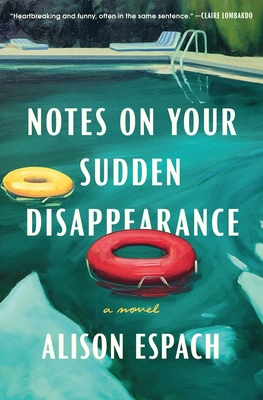
Notes on Your Sudden Disappearance, Book Review


Notes On Your Sudden Disappearance by Alison Espach

     The title of this novel could give the impression that it is a thriller—it’s not. It's something more. Notes on Your Sudden Disappearance tells the story of Kathy’s accidental death and whether her sister Sally, her family, or her boyfriend Billy will survive the guilt that haunts them.

     This elegantly written novel is about more than a single deadly accident. In its pages, the reader experiences four subsequent accidents in slow-motion—the unfolding tragedies of four ruined lives. The reactions of Kathy’s parents, Sally, and Billy wrenched my heart as they made one bad decision after another to staunch their pain. In spite of this, the novel is a story of redemption. While guilt is what brings Sally and Billy together and rips them apart, forgiveness and love finally unite them in peace.

     My one complaint is that there is a lot of teenage sexuality in this novel. While it makes sense in a novel that is a coming-of-age story, there were times it felt overdone and slowed the novel’s pace.

Four Stars!

Tuesday, April 12, 2022

Spring!

If you read my blog regularly, you'll know we moved to Winston-Salem three years ago and bought a home that suited our needs, i.e., a large room for my husband's office, a much smaller room for mine, etc. What we didn't realize at the time was how extensive the original gardens were. Or how neglected. Slowly, we are recovering the gardens getting rid of kudzu, poison ivy, blackberry brambles, wild roses, poison hemlock, and some weird stinky vine that sends out runners beneath the soil. Here are some photos of what we've found beneath the mess.

Azaleas.                                                                                                            Archangel.
I think this is an unusual variety of trumpet vine.
                        Solomon's seal                                                                                                                                                                                                  
     Deciduous magnolia called Jane magnolia.   
                           
Massive azalea blossoms the size of my hand.

Fat bumblebees are swarming the gardens.

Here's the reality of beautiful gardens. Lots and lots of sweat. And more yard waste than we can hope to compost, so most of it will go to the city compost. Plus, there are more bags of yard waste than you can see in the photo. And tons more still waiting to be cleared out. Huge, huge hugs to my husband who comes to the garden and says, "Tell me what to do."


Friday, February 25, 2022

Friday Five, Spring Isn't Here Yet

 Winter is drawing to a close. But I’m not quite ready for spring, even though it’s one of my favorite seasons. Here’s why I’m trying to live in the last bits of winter.

 1. I refuse to think about all the weeds the last snowfalls germinated. It will be thousands. Tens of thousands. Or, given I spent the late fall working on the kitchen reno, instead of weeding…hundreds of thousands.

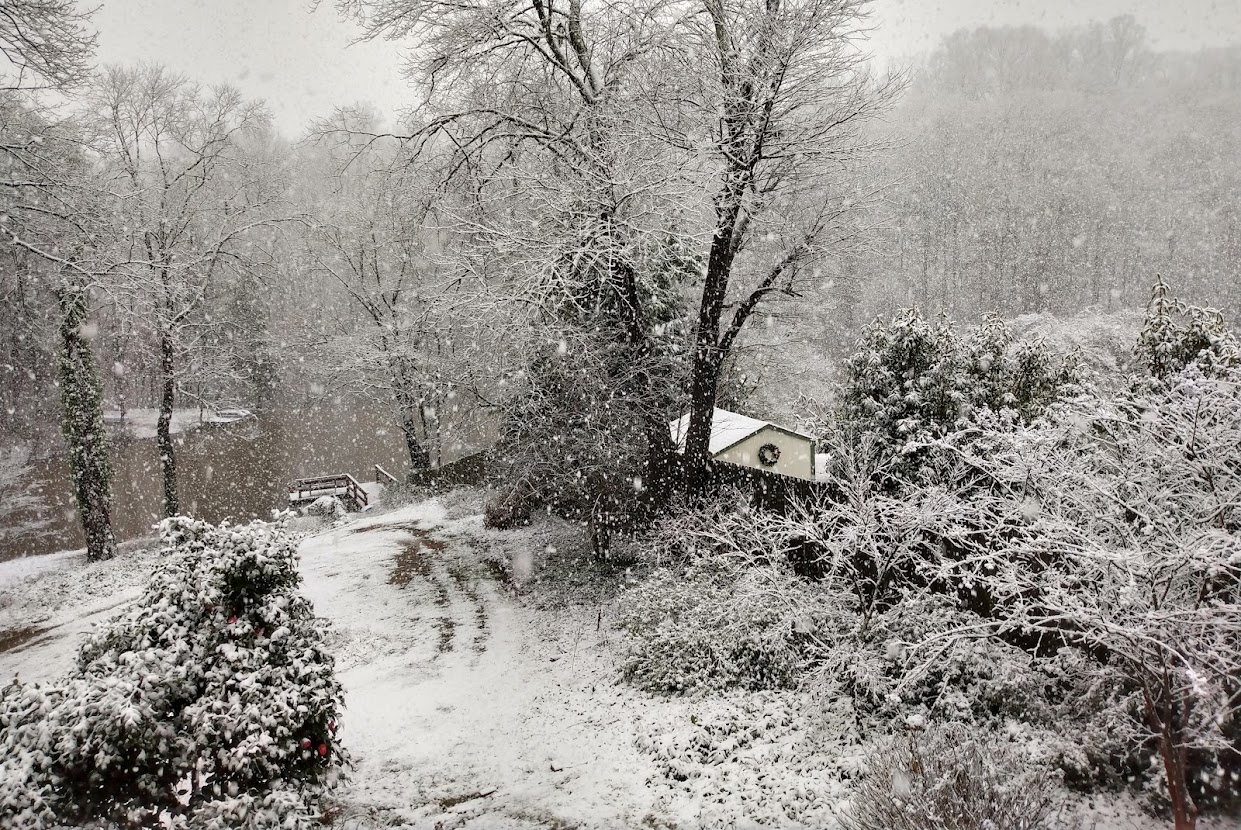
I prefer to think about the view from my office as snow falls.

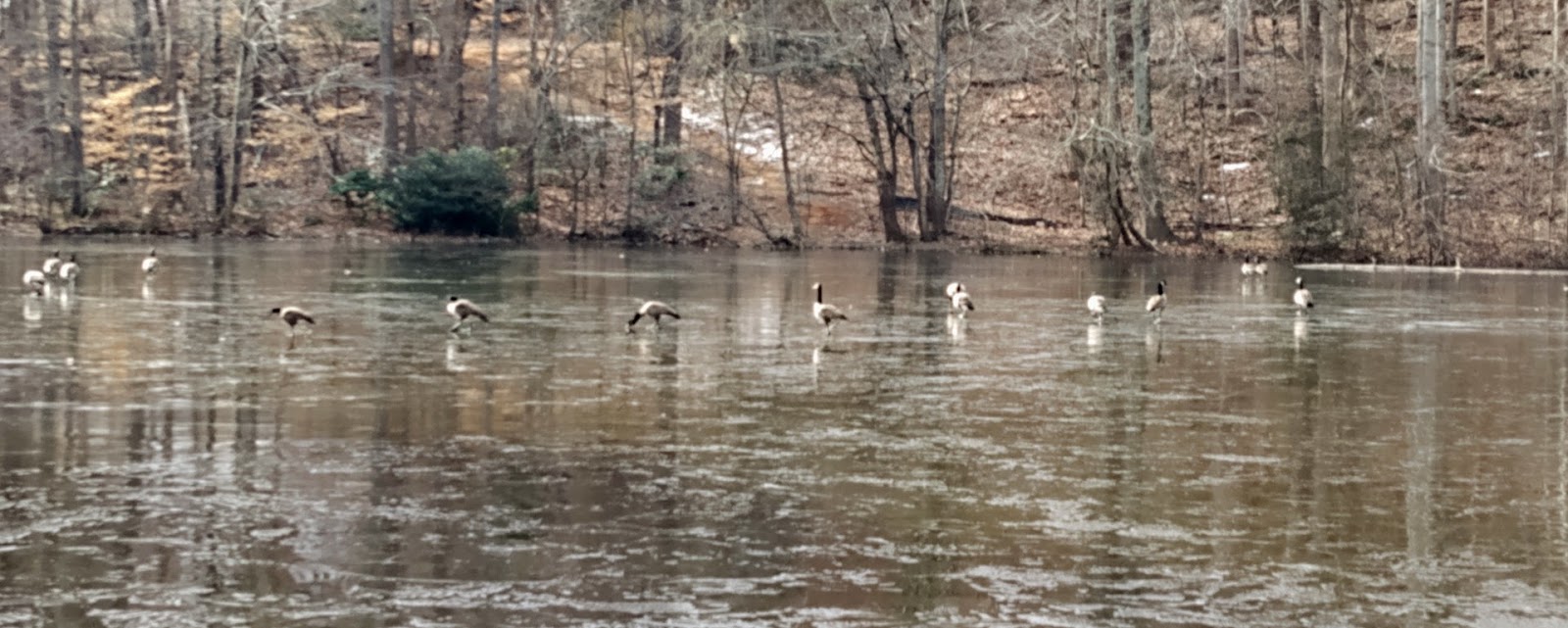
2. I refuse to think the Canada geese will be mating soon. They screech all night long, waking me up at midnight, 1 am, 2 am, 3 am… You get the picture. Why can’t they fly home to Canada for mating season—after all, they are Canada geese.

I prefer to think about them walking on the frozen pond, very peeved they can’t swim. 


3. I refuse to think that I will soon be changing clothes five times a day.

         1. Early morning: undershirt, shirt, jeans, wool sweater.

         2. Morning: remove wool sweater.

         3. Noon: remove undershirt.

         4. Afternoon: exchange a long-sleeved shirt for short-sleeved.

         5. Late afternoon: shorts and t-shirt.

         6. Dinner: jeans, undershirt, long sleeves, and wool sweater.

         7. Bedtime: fleece jammies, undershirt, heating pad.

Seven times a day... I’m going back to bed and pulling the covers over my head. I don't even want to think about the time change.

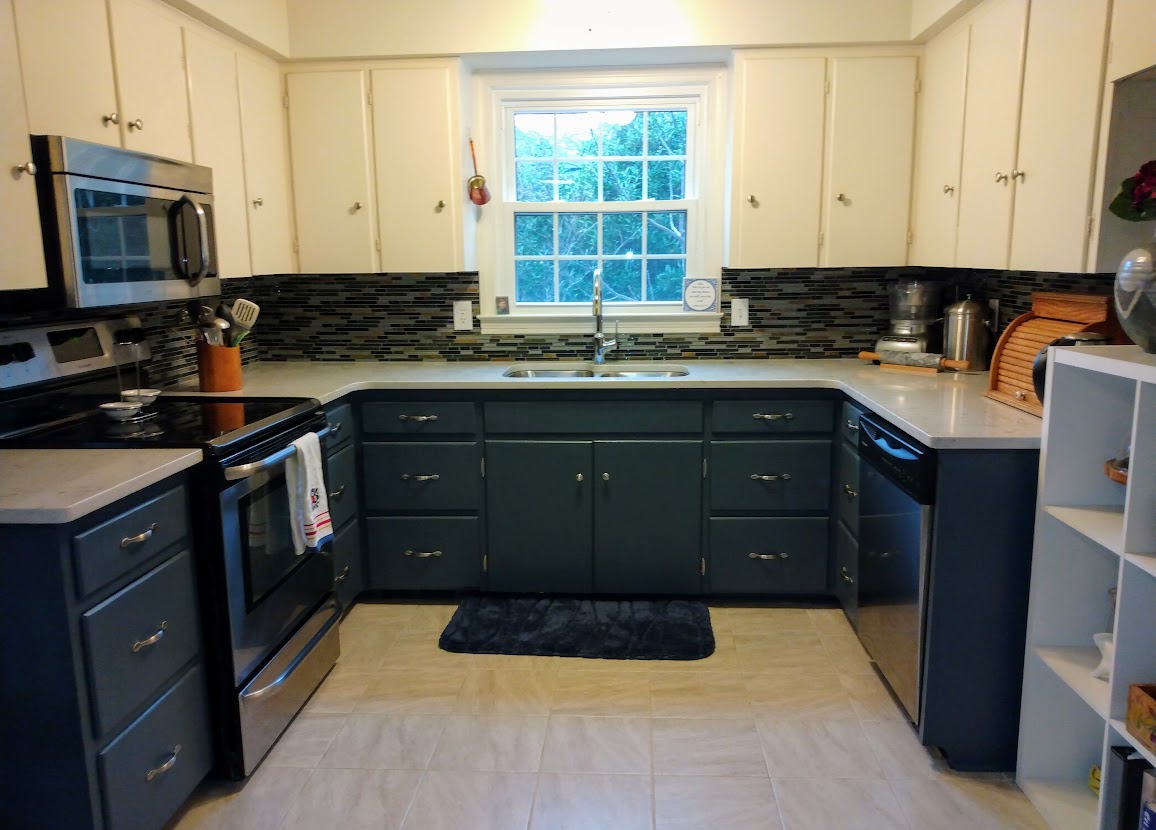
4. I refuse to think about kitchen reno, part five. Painting the upper cabinets. I really, really want to do this—to finish part five of a six-step reno. But that means a disaster, stench, and exhaustion.

I prefer to think about how much I love what we’ve already done. 

But the upper cabinets are pretty yellowed...

5. I refuse to think about…too late. I saw the first flowers. SPRING is here!!
Crocuses

Snowdrops

A hellebore