Showing posts with label writing. Show all posts

Wednesday, March 8, 2023

Exploring Duality in Identity, Experience and Tradition for Writers

 
Thursday, March 3 from 4:45-6:00 pm Eastern, I'd encourage you to attend "Exploring Duality in Identity, Experience, and Tradition for Writers and Writing." (It is free.) Adele Annesi, one of the writers involved, is a gifted novelist and this is sure to be excellent.


Here's more information: Critical and creative works often reflect two sides of identity: experience and tradition. Experience explores what it means to be between two cultures, lifestyles, habits, languages, genders, heritages, realities, and selves. Tradition reflects on customs, touchstones, and figures.

Authors of fiction, memoir, and poetry Adele Annesi, Nicholas A. DiChario, Marc DiPaolo, Annie Rachele Lanzillotto, and Janet Sylvester will read excerpts from their work and discuss the role of duality in their creative efforts, followed by a Q&A.
This virtual event is sponsored by Bordighera Press. 
You can attend on Facebook via this link:  https://fb.me/e/5Q56iAaij


Thursday, August 27, 2020

 Image may contain: text that says 'WESTPORT WRITERS WORKSHOP' 

Here's a great opportunity to learn more about creative writing!

Introduction to Creative Writing:

Beginner to Intermediate

Join us on Zoom this fall for a lively, interactive study of creative writing and critique with Adele Annesi for the Westport Writers’ Workshop. For more, visit Westport Writers’ Workshop.

I know Adele Annesi personally. She's a great writer and teacher with lots of experience in helping writers take their work to the next level.


Friday, August 10, 2018

When Life Interrupts Writing

I'm not allowed to bend yet, so I sit on the
coffee table in my office when I work on my plot.
Since my last update, life has been a crazy haze of moves, surgeries, etc. (In the past six months, my husband had six emergency eye surgeries, I had three spine surgeries, and our son had cardio-thoracic surgery. Our daughter moved to Maine, where she’s a professor of mathematics at a college there, and our youngest son moved to grad school to study analytical chemistry.)

Despite all that, I’ve made progress on the plot structure of my work in progress. My cork board has gone from two notecards to thirty notecards, each representing a single scene/chapter. I'm somewhere between a half to two thirds done. I’d hoped to have completed the entire structure by now, but I’m telling myself to be thankful for what I’ve finished. Besides, every novel has its own time and way to be written. Sometimes I’ve started writing before I knew anything but the opening and closing scene. And another time, I plotted an entire novel on a two-hour drive. (I wasn’t driving, of course.)

The only advice I can give to writers who find that life keeps interrupting their work is to keep the story alive in your mind. If you can’t write, read. As often as you can, read over story notes, read over your plot outline, and scribble down any new scene that comes to mind—you can always toss it out later if it doesn’t work. That way, when you do have time to write, the embers of the story will be warm. And you won’t have to restart the fire of creativity.

Thursday, July 27, 2017

Novel Editing

No automatic alt text available.


This is what life looks like the day after you get an edit letter from your literary agent. But there's nothing that can't be conquered without tea, biscuits, highlighters, and lots of post-it flags.

Monday, January 16, 2017

Happy "New " Year

The month is half over, and I haven’t even posted on the blog yet this year.

Here’s what’s been going on:


1. My oldest son got married last month. It was wonderful. Our family is thrilled.
Here's a photo of my husband and me at the wedding.


2. My third child graduated from university. He’s now an electrical engineer. I’d post a photo, but he’s camera shy.


3. I had a significant birthday.

One of my gifts was a ten step puzzle box. Beautifully inlaid and wonderfully intricate.


4. A beloved family member who lives thousands of miles away came to visit,  and we had a murder mystery dinner. This is my youngest son--normally he's a college junior majoring in biochem and not a drug-dealing biker. We love getting into character.
5. And last, but not least, I have a deadline approaching quickly. So I’ve got a new tea cup to make sure I finish in time. It holds at least five times the tea of a "normal" cup. So five times the double bergamot earl grey. Yum!


Wednesday, June 15, 2016

Guest Post by Laurel Garver, Building Story Tension

Displaying AlmostThere_cover_midsize.jpgDisplaying AlmostThere_cover_midsize.jpgToday I'd like to welcome author Laurel Garver to the blog. Laurel is the author of several books
I had the privilege of reading this novel
early. It was wonderful!
including: Never Gone, Almost There, Muddy-fingered Midnights, and Emotions in the Wild.

How Fragile We Are: Building Story Tension through Illness and Injury


By Laurel Garver


If you want tension in your fiction that’s truly organic, you can’t go wrong with a character experiencing bodily weakness, whether due to illness or injury. It’s something every reader can relate to, at least to some degree. We’ve all had a stubbed toe or minor cut or bruise, fallen ill with a head cold or stomach ache.


Suffering a more serious injury is something we all deeply fear. The mere implied threat of it will naturally cause a self-protective fight-or-flight response. Illnesses provoke a similar fear—and often disgust as well, sure to create tension in any relationship.


No matter the time or setting, human characters are vulnerable to forces that can steal their health. This applies to every character in your story. Illness or injury can incapacitate or simply hobble your protagonist, and it can also remove his or her usual sources of help. It can threaten the protagonist’s one true love, or family, or other favorite people. It can also knock your antagonist down a few notches when you need to buy your protagonist time.


The illness or injury might also become a rallying point for your heroes, such as cancer or a sudden loss of sight that requires a team to help the affected person.
In my novel Almost There, I explore the way illnesses and injury can become a family’s rallying point. Illness also directly challenges my protagonist Dani’s core flaw—wanting to be in control—by first removing a source of help and then hobbling her. The medical components of this story took the most significant research and planning. Here are some lessons I learned from that process.

Do your homework before selecting your means of bringing on a fictional illness or injury. Some injuries heal more quickly than others, some are more dangerous in certain environments, some gradually drain a person of strength, and some will lead quickly to more serious issues. Not all illnesses are created equal either. Many vary in how they spread, how quickly or slowly they incubate before causing symptoms, and how easily they can be treated.


Some key things you want to know before picking your “poison”


Injuries
What commonly causes this?
What’s the typical range of severity?
How much and what kind of pain and discomfort accompany it?
What is the typical treatment for this injury?
How much professional care is usually called for?
What is the typical healing time?
What are the stages of healing?
What are common complications that prevent healing?
Under what circumstances might this injury prove permanently disabling or even fatal?
(For non-contemporary stories—how advanced is care for this kind of injury in my world?)


Illnesses
How is the illness contracted?
What is the incubation period?
Is there a vaccine? How effective is it?
What parts of the body does it effect and how?
How much and what kind of pain and discomfort accompany it?
What are early interventions? How effective are they?
What is the typical treatment?
How much professional care is typically called for?
How long is the typical recovery time?
What are the stages of recovery?
What complications can arise?
Under what circumstances could it cause permanent disability or prove fatal?
(For non-contemporary writers: how well is this disease understood in my world? How would it be treated? Could it be cured?)


Read as much as you can from established, evidence-based medical sites to begin with. The CDC and Medline Plus are government-run health agency sites; The Mayo Clinic and Web MD are two other comprehensive, well-regarded sites worth exploring.


You might discover that your cool medical plot twist requires some additional planning. I make use of a common contagious illness with a very long incubation period—10 to 14 days, most of which the person has no symptoms. I found I had to create a calendar in which I tracked not only the incubation but also the progression of symptoms and recovery for each affected person.


Once you’ve done some initial research, you absolutely must fact check it with a health professional. Chatting with several nurses and doctors in my life has helped me tremendously—not only in having the most accurate information, but also in getting real-life details about how real people experience the condition. Chances are you are no more than one degree of separation (friend of a friend) from a healthcare provider who’d be happy to answer your questions. (For additional advice on interviewing, see my posts “Expertise is Everywhere: Why and How to Use Interviews to Research Fiction” and “Channel Your Inner Reporter: Using Interviews to Strengthen Your Fiction.”)


Be sure to let them know this information is for a fiction project, not a real person who could hold them legally liable for health outcomes. For this reason, some folks will prefer to fact check something you’ve already written—so give that as an option. You might find that the healthcare pro will steer you toward even cooler ideas than you could have come up with on your own.


How might illness or injury add tension to one of your stories?


About the Author
Laurel Garver is a writer, editor, professor’s wife and mom to an arty teenager. An indie film enthusiast and incurable Anglophile, she enjoys geeking out about Harry Potter and Dr. Who, playing word games, singing in church choir, and taking long walks in Philly's Fairmount Park. You can follow her on her blog, on Twitter, or on Facebook.


About Almost There
Seventeen-year-old Dani Deane is certain a magical trip to Paris will cure her widowed mother's depression. But when Dani’s tyrannical grandfather falls ill, they must go to rural Pennsylvania to deal with his hoarder horror of a house. In the midst of crisis, can Dani trust God to bring hope and healing?
Friday, November 6, 2015

Asterisk Edit and Aunt Sophie's Cigarettes


I’ve been busy. I finished a writing assignment that I’ve been working on for months, and I finished my new novel’s asterisk edit.

This is probably the first time you’ve ever heard of an “asterisk edit.” Because I made the term up. 

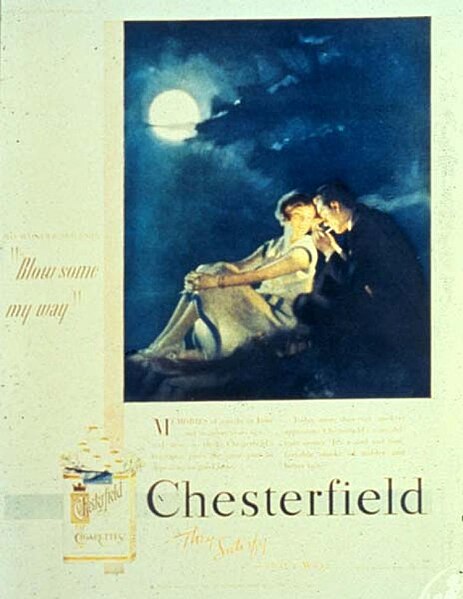
File:Blowsomemyway.jpg
"Aunt Sophie," courtesy of Wikimedia Commons.
Here’s how it works. You’ve just finished your first draft of your latest novel. You celebrate (or weep). Likely both. Celebrate because “Hey, the first draft is finished!” Weep because a first draft is a celebration of everything that can go wrong on a page…and now you have to fix it.

You begin to edit. You fix, rewrite, rearrange, etc. But sometimes you’re not sure. You need a beat in certain spot but you’re not sure what type. Or something is wrong with a scene opening, and again, you’re not sure what. Or you think you already dropped a clue about Aunt Sophie’s fling in Paris in the ’20s, but you don’t know where. Or you need to verify a fact on Google. All of these things can really slow down your first edit—because spending an hour trying to figure out what brand of cigarette Aunt Sophie would have smoked in Paris is going to take you out of the plot and voice. When I run into something like that, I stick in a single asterisk into the text and leave myself a note in the text in parentheses. Then, I plow ahead.

After the grand first edit is complete, I begin the asterisk edit. Using the “Find” feature of Word (far right side on the top of the tool bar under “Home”), I type in an asterisk and Word will bring up all the asterisks I added to the manuscript. One by one, I deal with each asterisk, until they are all gone. Sometimes I can do a dozen asterisks a day. Sometimes one—it took several hours to discover Aunt Sophie may have rolled her own cigarettes.

For my current manuscript, I had 71 asterisks—in a document that is currently 75,000 words. Not too bad.

By the end of the asterisk edit, the novel is in decent shape. I’ve patched the plot holes, added in beats, and verified all historical issues. The next step is the voice edit. But that’s another post.

Anyone else have special types of editing passes?

Friday, June 19, 2015

Book Review, Emotions in the Wild


I received a free copy of this book in exchange for an honest review.

When I first heard about this book, I was struck by how much I wanted it. How it filled a need I didn’t even know I had.

As any writer knows, one of the most difficult things to communicate is the emotion of a character. How can you communicate a character’s feelings subtly yet distinctly? In other words, how do you show these emotions to your reader without telling them? And how can you do so without using clichés?

Ms. Garver’s book Emotions in the Wild is a guided journal that shows writers how to use the power of observation in their everyday lives to create an “emotions bible” to guide them in crafting a unique reference book for their writing, a personal source book for help in describing what an emotion (anger, jealousy, etc.) looks like, sounds like, and even how it might be provoked.

The book begins with an introduction explaining how to use the journal. The rest of the book is divided into emotion chapters—a total of 39 different emotions are given for examination. Each chapter includes pithy quotations from famous individuals to stimulate thought about the emotion. Following the quotes are sections where the writer records observations on the particular emotion’s “Common Triggers,” “Facial Expressions,” “Postures and Movements,” “Range of Reactions Observed,” and “Related Words, Idioms, and Phrases.”


In the past when I’ve been stumped with how to describe or explain something, I’ve often used Roget’s “Concept Index,” but now I’m looking forward to incorporating this journal into my life and watching it bear fruit in my writing. Five Stars! Click here to buy it.

Me and my copy.

Wednesday, March 4, 2015

Six Word Memoirs

Six Six GalleryToday, I stumbled across an interesting site/idea. The site is called "Six-Word Memoir." And the idea is to distill your thoughts into six words to get to the creative essence of something. As a writer, this really appeals to me. And it's a great exercise in precision.

So I thought I'd give it a go. Here's my six word memoir for the last couple of weeks:

Middle muddle, writing a first draft.

I'd love to get some comments where you all summarize your past few days in six words!

Thursday, January 15, 2015

Five Things Only a Writer Would Say

In the spirit of full disclosure, these are not things I’ve said aloud to other people. Except my family. Hmm. Maybe that’s why all my kids have gone into math and science.

One. “I can’t decide whether to use the word said or told.” Nuances of meaning eat hours of time.

Two. “Why won’t my character tell me the truth?” Yes, I know the characters exist only in my mind. I create them. But that doesn’t mean I know them. It takes a while to get to know them. And just like real people, characters lie. Even to their authors. (And in case you’re wondering, I’ve never used perception-altering substances. I was born this way. Wait…that sounds worse.)

Three. “Uh, the NSA doesn’t really monitor our Google searches, right?” I actually know they don’t, because if they did…I’d be arrested. I mean seriously, I’ve Googled everything from medieval poisons to how to make a murder look like an accident to schematics for a dumbwaiter. (Okay, the dumbwaiter thing isn’t too threatening, but I could be planting a bomb on a dumbwaiter.)

Four. Speaking of arrests, another writer once said to me, “You know, if we got arrested and went to prison, we’d have lots of time to write.” (I admit that thought has crossed my mind too.) I pointed out that one isn’t arrested for jaywalking, our most probable crime, and she agreed that it wasn’t likely we’d get sent to prison—unless the NSA really does monitor Google searches. In the meantime, I’ll keep juggling writing, housework, regular work, cooking, ironing, etc.

Five. “I wish I’d been shot in the thigh.” When one of my characters had been shot, I was finding it hard to describe the sensation of a bullet puncturing the skin/muscle and Google had only so much to offer, so I was wishing for personal experience. Of course, the moment I wished this, I realized that had I been shot I’d be in shock and probably wouldn’t remember anything. Sigh.


File:OMPMScellwithscreen.jpg
Since finding this image (courtesy of Wikimedia),  I don't think #4 will ever cross my mind again,
especially since I really like writing while lounging on my couch. 

Thursday, January 8, 2015

The Real Romance of Writing

File:Chile - Santiago 43b - antique typerwriter (6834276976).jpg
Photo courtesy of Wikimedia Commons


This week I started writing a new book.

Writers write novels in many different ways. Some have complete outlines detailing every plot twist. Others, like me, have only a general idea. (I usually begin a novel when I figure out the novel’s beginning, ending, main characters, and how to tell the story—structure, point of view, etc.)

And as exciting as the fresh page/blank computer screen is when you type “Chapter One,” it’s also terrifying. You can’t help but think about the thousands of hours ahead. Because as romantic as being a writer sounds, it’s more than ten thousand hours in a chair by yourself, fighting with language. And plot and characters. Yes, characters are imaginary, but they are like children, born with their own will and agenda. They are two year olds who stomp their feet and refuse to eat peas even though they loved them yesterday.

Lest I mislead you into believing the tortured artist cliché, the aloneness doesn’t bother me. I’m introverted by nature. So I’d rather be in a quiet room arm wrestling verbs than trying to calm an irrational customer. (I worked in customer service the summer between high school and college and discovered that my job was to let people vent. “Why yes, our company is made up of a bunch of losers and idiots. Thanks for noticing.”)

So compared to that, hours of chair-sitting doesn’t seem so bad. But the real reason, I’m brave enough to face that first page is because a few weeks ago in the mystical stretch of time between sleep and wake, Darcy, Meredith, Peter, and Priscilla told me bits of their story. And I have to find out the rest. That’s the romance of writing.

Friday, September 26, 2014

Grammar Snobs Unite

If you’ve been reading my blog, you know I’m looking for part-time, from-home work. Much easier said than done.

I’ve had a good nibble, and I’m waiting to see whether the big fish bites. In the meantime, I keep applying. I heard back from another company the other day. The email told me I was being considered for a position. They explained I’d need to pass two tests first. (This is pretty standard.) I continued reading the email. It went on to tell me how much they pay per hour. (Twelve year old babysitters make more. Not a joke. I recently got an email looking for a reputable teenage babysitter, so I know how much they make.) The company’s email went on to tell me that if I had a PhD, I could make $2 more per hour—the wage someone was willing to pay a babysitter.

The email ended by saying I needed to hurry because the tests were due on June 11 and they were eager to hire for fall of 2012.

Um, yeah. A friend suggested that the email was the real test and I ought to correct it and send it back.

But the whole thing got me to thinking. Honestly, people don’t seem to care much about written communication anymore. Not a day goes by where I don’t see an error in a sign, newspaper, or book. (There’s an interstate sign in my city that drives me crazy because it has an abbreviation error. And don’t even get me started on mail that arrives addressed to the “Keller’s.” Really? Singular possessive?!)  I’m beginning to feel the urge to start carrying a red Sharpie on a string around my neck. The problem is I don’t think I’ll be able to limit myself to correcting only mail, newspapers, and books. Pretty soon, you’re going to read that Connie Keller was arrested for propping a twenty foot ladder in a lane of traffic on Interstate 24 so she could correct a sign. No doubt, all my grammar Nazi friends will rally to support me. It might not be a big group. But our signs will all be spelled correctly.

Friday, July 18, 2014

What's Up Friday

What’s up Wednesday is a blog meme that I’ve been interested in doing for a while. But I haven’t quite gotten around to it. In the meantime here’s my What’s Up Friday.

What I’m Doing

Finishing a resume. I haven’t written one of these in two decades. Ugh. It’s interesting though—who knew there were fads in resume writing. I looked at resumes of technical writers (that’s what a lot of my past jobs have been) and I discovered some…creativity. One tech writer (currently with a very reputable laboratory) had a resume with a “cowboy theme.” In fact, one phrase mentioned “wrangling words and people.”

Why are there fads in resumes? Why can’t we just list our past jobs, list our degrees, and promise to work really hard? I mean, what else is there?

What I’m Writing

Editing. And more editing. I’m two-thirds of the way through an edit of my latest work-in-progress. The 2/3s mark is always writing/editing kryptonite for me. I’m just starting to get burned out, but not quite burned out enough to say, “What the heck.” So instead, I experience huge amounts of self-doubt. Do the themes work? Is the character development arc legitimate?  Just how underwritten is this puppy? Will anyone want to read it? And, am I EVER going to hit the necessary word count?

What I’m Reading

 
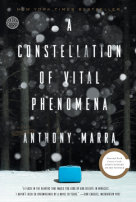
Earlier this week I got my next book to review for “Blogging for Books.” It’s A Constellation of Vital Phenomena by Anthony Marra. I’m not far into it, but the words and phrases are so lovely. It’s like entering a spell cast by a muse’s fairy godmother.

The setting is interesting—Chechnya, the characters are sympathetic, and pacing is spot-on, so I just hope, hope, hope that the author can pull off a wonderful plot. I’ll let you know how it turns out.

If you missed my review of the last B4B book I read, click here.


Monday, December 2, 2013

The Author Got Dinner on the Table Early

If you’ve been following the blog, you know that I’m in the midst of editing book three of the Screwing Up Time series. Editing is always a very focused, intense time. I’m looking for the last of the errors, polishing the prose, and hunting the typos.

The other day, I was smoothing out a fight scene when this sentence popped up in the middle of the action, “Raise Matthew’s allowance.” And I laughed. Thankfully, my kids are older and usually don’t feel compelled to hack my computer any more. Years ago, I password protected my computer when I found out that my daughter was reading the endings of my books before I’d printed them out. (A great evil!) Anyway, the kids thought the passwords were a challenge and took to leaving notes in my text to prove they could hack my system.

Honestly, I do miss the notes in my texts that said, “Jacob loves Mom.” On the other hand, this recent foray into my latest novel has revived nightmares that after a book is published I’ll get an email from a reader that says, “In chapter 25, it reads ‘Mark got bit by a zombie and stabbed Miranda. They both died and the author got dinner on the table early.’” 

Friday, July 5, 2013

Friday Five: Writer's Block

As I've mentioned before, I'm writing a new novel. (Yes, I'm editing one too.) And everything's been going perfectly--I'm about a third of the way through the first draft. Then, yesterday, I hit a snag. You would think that I'd be "in touch" enough with myself and my work that I'd know I hit a snag. But it doesn't work like that. First drafts are odd creatures and often have warts and birth defects--but that's okay because they get fixed later. So when I first hit a problem--I couldn't finish a scene, I assumed it was a wart. By day two of the scene, I knew there was a problem because...

1. I still couldn't finish writing the scene. This ought to have been a neon, blinking sign of a problem. It wasn't.

2. Then, I wandered the house looking for random things to clean. I didn't polish the silver, but the rugs got vacuumed more than once.

3. I got this unsettled feeling--as if the zombie apocalypse was coming and I didn't know.

4. I became grouchy, wondering why my children weren't eager to clean the house. Just because yesterday was a holiday and not even our normal clean-the-house day doesn't mean we can't embrace it as a middle-of-the-week clean-the-house day.

5.  Finally, after the tenth time of working on the scene, I realized it wasn't going anywhere.

Now I know why I've been wandering the house and irritating myself and my kids. I've got a minor (hopefully) case of writer's block. To beat it, my plan of attack is pretty simple. I sit down with a ream of notebook paper and start writing. I'll start with trying to identify the issue. What the heck is wrong with the scene? Is it plot or character? Did the wrong character take over the scene? What was/is the purpose of the scene--did I get off track? What scene will follow this scene? Am I missing a segue? Is this scene misplaced in the novel--should it come later? Once I identify the problem, I'll brainstorm fixes.

Hopefully, I can figure it out quickly. On the other hand, if it takes a couple of days, the upside is that I'll have a really clean house.


Monday, June 24, 2013

Writing Without My Laptop

I still haven’t gotten my computer back. It was supposed to arrive on Friday, so techno-daughter could help me fix the computer over the weekend. But, hopefully, it will arrive today and I can begin the process, just without someone to hold my hand through it.

But I’ve learned something. No matter how hard it is to write. I will write.

I wrote long hand. On lined notebook paper, on scraps of computer paper, and even on polka-dotted yellow Snoopy paper.

I wrote without my writing routine. Which was really, really hard. Like most writers, I have my routine—my first drafts are written on the couch where warm Eastern light streams through the arched window. Editing is done on my bed where the room is cool and Northern light filters through a hexagonal window. Okay, I’m a little odd. But I’m not the only one. Edith Wharton wrote in bed and everything had to be just so. When she traveled, she had hotel staff move the bed so that light from the window fell “just right” across her paper.

I transcribed my scribbles from paper to the lame computer (and I’m very thankful for it) with the titled screen while sitting the peeling faux leather chair—where I am currently writing this blog post.


So, I’m telling myself that this very extended no computer time has actually been a blessing because I’ve learned patience and I’ve grown in my understanding of myself as a writer…yeah, I’m not buying it either, but that’s what I’m telling myself.

N.B. Tomorrow Screwing Up Time is going on sale at Amazon for 99 cents!

File:Gordijnen aan venster.JPG
This isn't my window--no laptop, no way to process and upload photos--but  I love the way the light comes through . I think I could write there. It's a bed and breakfast in Tallin. Photo by Nieuw, courtesy of Wikimedia Commons.

Friday, March 22, 2013

Be Careful What You Read


The other day my son Jacob asked me to proofread a paper before he went to class. I said, “Sure.” After I read it, I said, “Uh, Jake, what’s this all about?”

Turns out, Jake had to read an essay in his rhetoric textbook and write a paper on it. As he read, he became increasingly skeptical—it seemed to him that in spite of the author’s inflammatory rhetoric, the author’s quotes were weak and he made several logical fallacies. So, Jake decided to google the author….wow!

Subsequent to the publication of the textbook, the essay’s author was stripped of his journalism awards. Turns out the author not only plagiarized, he invented quotes. Then, when the truth came out, he attacked his critics, etc. Jake mentioned this in the conclusion of his paper.

My hope was that this essay assignment was a “trick” from his professor, that the prof used this as an exercise in always being vigilant—just because something is in a textbook doesn’t mean it’s right.

So Jake took the paper to class for peer review. As the students in his group read his paper, they pulled out their phones and googled the author. Jake said, “They started muttering and swearing.”

Then, during the class discussion after peer review, no one from Jake’s group said anything. The other groups talked about how great the article and author were. Jake felt increasingly awkward. Finally, he raised his hand, shared his opinion, and explained what he found out about the author.

When Jake got home, I said, “So was it a set-up by your professor?” Jake said, “I don’t know, Mom. When, I talked about the article and the author, the professor looked surprised—I don’t think she knew.”

Hmm…I wonder how she’s going to grade this paper.

Update: Jake just had a meeting with his professor--she did know all about it. I guess she was just surprised that any of the students caught it. :)

File:Stack of Library Books on Piano.JPG
Image courtesy of Wikimedia

Wednesday, February 13, 2013

Subliminal Messages and Editing


Yesterday, I began editing my latest novel. I printed the whole novel up and sat down with a ream of paper. I was going to begin by dealing with all the notations in the novel. When I’m drafting, I don’t want to get caught up in anything that will slow down the pace of the writing. So, I leave myself notes like: find a name for this character, add a beat, figure out where item/character X is, and fix—this is horrible.

But I decided that it might be a good idea to at least read the first couple of chapters since it’s been three and one half months since I last looked at the chapters. I told myself that I’d just read through it. No editing. So I curled up on the couch and began reading. I didn’t get far.

I read the first sentence. I stopped. I read the sentence again. I swallowed. It was the worst sentence I’ve ever read. Truly horrible. As in someone must have inserted this sentence into my manuscript as a joke horrible. (And my kids often do that. They’ll crack my passwords and randomly insert sentences.) But I couldn’t blame this on them. Their insertions are more transparent—Buy Jacob a car. Raise Matthew’s allowance.

In any case, I couldn’t let the bad sentence pass. I picked up my pen and rewrote the sentence over and over. I think the only thing left from the original sentence were a couple of  “the”s and an “a” or two. And once I got started…well, the red pen is a hard thing to put down. (When I was in college, the rumor was the longer you could keep the professor from picking up a red pen, the better your grade. It was actually true. We got docked a letter grade for every spelling/grammar error.)

By the end of my writing period, I’d edited two chapters. But, sadly, I didn’t come across any pleas for new cars, money, steak dinners, or vague threats about what would happen if I put onions on homemade pizza again.

I wonder what the next few chapters will bring…

File:ٍEditing strike01.jpg

Monday, February 11, 2013

Post-First-Draft-Creative-Exhaustion Syndrome


Last Friday I finished the first draft of book three in the Screwing Up Time series. Yay! It was the fastest I’ve ever written a first draft. It took three and one half months and the holidays were in there too.  I’m amazingly thankful.

But if you’ve never written a book before, you should know that writing “The End” is nothing like you see in the movies. In movies, the writer types “The End,” grabs the paper out of the typewriter, tosses it on a stack of papers, and smiles triumphantly. That cues the-worst-is-now-over-the-writer-will-conquer-the-world music. Very romantic. Very not true.

Here’s how it goes for me (and most writers I know). I type “The End.” Then, the first thought that goes through my mind, “Maybe I just wrote ‘The End’ because the ending is so bad that the reader would never know it’s the end unless I told them.”

The next three to five minutes is spent wondering how much the book sucks. A little, a lot, or toss it into the fire? However, having written other novels, I know this is post-first-draft-creative-exhaustion syndrome. The cure is to ignore self-doubt by chanting, “A first draft is a celebration of everything that can go wrong on a page.”  

Now two days have passed. It’s time to print out the tome, grab my red pens, my highlighters, and my multi-colored post-it flags. And so the editing begins. 

File:The End Book.png

Monday, January 21, 2013

What Happens When You Write a First Draft in Three Months


At the end of October I began writing book three in the Screwing Up Time series. By the end of this month or early February, I should finish the first draft. For me this is an amazing pace. But there are costs. Here’s what happens when your write a first draft in a little over three months.

1. Weeds take over your previously manicured flower gardens. You also curse the mild winter, which should’ve killed off all the fall weeds but didn’t.

2. You forget to reply to emails. So not a good thing.

3. You don’t check your email a hundred times a day, wondering if the agent who has your literary fiction manuscript has made a decision. Okay, you still check your email a lot. But you obsess over it less. Sort of.

4. You forget to clip the dog’s toenails. The dog is thrilled. Your wood floors aren’t.

5. Your youngest child plays way too many computer games. His siblings murmur, gnash their teeth and say, “You made us set a timer and only let us play for 40 minutes a day.” On the other hand, the youngest child thinks you’re a really, really great mom.