Showing posts with label book reviews. Show all posts

Tuesday, April 10, 2018

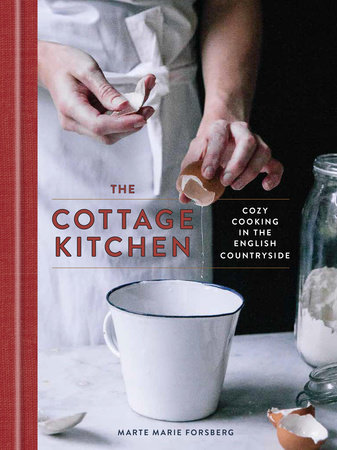
The Cottage Kitchen, cookbook review

The Cottage Kitchen By Marte Marie Forberg

When I received this cookbook, I fell in love with the sumptuous photography. And my husband, who loves paging through cookbooks marking the foods he wants me to make, fell in love with the Steak and Cheese Pie. It is delicious. I’ve already made it twice at his request. I expect to be making it again for his birthday dinner in June.

The cookbook is an interesting blend of Norwegian and European foods and includes everything from Truffled Vegetable Toad-in-the-Hole to Norwegian Apple Trifle.

I also made the Leek and Cheese Gratin, and it was fantastic. I was excited to try the Potato Soup because it’s one of my favorite foods. However, it was a bit of a disaster. I was concerned looking over the recipe because the proportions of the ingredients didn’t seem correct. But I went ahead and made it. My soup didn’t even come out the same color as the soup in the photo. Though it’s possible I made an error, I suspect there are some typographical errors in the recipe. And I did find another recipe where one of the end steps, brushing the pastry with butter before popping it in the oven was left out—though the photo showed the pastry being brushed.

All in all, a fun cookbook. And it’s worth the price just for the Steak and Cheese Pie recipe.

I’d give it a 4 out of 5 stars.

I received this cookbook from Blogging for Books in exchange for a review.

Friday, September 22, 2017

How to Set a Table, Book Review

As someone who's both entertained and provided hospitality for years (not the same thing), I was curious about How to Set a Tablet. After reading through it several times, I think it’s a great little introduction to having people into your home for meals (though probably not that helpful to those who aren't just starting).

Like any good introduction, this book begins by explaining the “pieces,” detailing each part of tableware from plates, serving ware, linens, and glassware and explaining their roles. For example, the book explains the differences between porcelain, earthenware, and stoneware and does the same for stemware, i.e., why red wine glasses have a different shape than white wine glasses. However, lest you feel intimidated, the book assures you that a much more casual approach is equally valid. And, honestly, most guests are more comfortable with a casual approach where they don’t have to wonder which glass is meant for what.

Finally, the book has suggestions for all types of shared meals. Everything from formal dinner parties, wine and cheese get-togethers, BBQs, picnics, and even how to make take-out meals something guests will relish. Personally, I loved the section where the book gave suggestions about how to plan and care for guests that are early risers. We sometimes have guests from different time zones, and I really, really don’t want to get up at 4am. So I was able to pick some hints about how to provide for guests' comfort and needs without getting up during the middle of the night.

I must mention that the book is full of lovely photos that will inspire you to think outside of traditional table setting and imbuing the meals with warmth and friendliness, which is the goal of having people into your home.

I received this book from Blogging for Books in exchange for an honest review.

Wednesday, August 2, 2017

The Tea Planter's Wife Book Review

The Tea Planter’s Wife by Dina Jefferies is a Rebecca meets Jane Eyre set in Ceylon in early twentieth century.

As a historical novel, Jefferies has done a wonderful job of recreating the Ceylon of the 1920s and ’30s vivid detail, both in terms of the lush physical setting and the cultural milieu. The author does so cleanly by integrating the details into the action and character development, so the reader isn’t tempted to skip paragraphs in order to “get back to the story.”

Another aspect that I appreciated was the raw and honest look at a loving marriage. While there are many secrets and lies in Gwen and Laurence’s marriage, they truly love each other. The readers sees that not only in the sacrifices the characters make, but also in the physical love they have for each other, which I found very refreshing. Often, it seems that the last “taboo” in novels is sexual delight between married people. That said, there are many frank instances of sex between the couple, but the scenes avoid eroticism.

The only difficulty I had with the novel was that the author occasionally lapsed into telling the reader things that could be gleaned from the text. Though that happened less often in the second half of the novel.

All in all, a very enjoyable book. I’d give it 4.5 stars. And I’ll definitely read other novels by this author.

I received this book from Blogging for Books in exchange for a review.

Tuesday, September 15, 2015

The Martian, Book Review


The Martian by Andy Weir

A freak accident leaves Mark Watney, an astronaut/engineer/botanist, stranded on Mars. And it’s four years until the next group of astronauts come to Mars. Mark doesn’t have enough food or water to make it. The Martian is the story of his survival.

Though I don’t usually read sci-fi, I really enjoyed this book! Maybe it’s because I have sons who are chemists and engineers (Weir nailed what engineers thinks of chemistry!), or maybe it’s because Weir took an amazing survival saga, added a good dose of dry humor and excellent pacing, and turned it into a story that reaches beyond genre—it’s a novel I can recommend to anyone who wants a good story told well.

The one caveat I have is that this book has a lot of profanity. I understand it at the beginning—when you discover you’re most likely going to die alone on the red planet, swearing is a natural reaction. But eventually, the liberal use of f-bombs began to grate on me.

That aside, this was an excellent book. I hope this author writes more novels—I can’t wait to read them.

N.B. I received this book in exchange for an honest review.

Saturday, July 18, 2015

Book Review, The Little Paris Bookshop


The Little Paris Bookshop is the story of a lost man, Jean Perdu. Two decades earlier, the love of Perdu’s life walked out on him and his life stopped. This novel tells the story of how Perdu comes to life again.

The rebirth of Jean is delightfully mirrored in the reanimation of his senses: sight (Paris, the Seine, Provence), sounds (singing, tango music, soughing winds), tastes (wine, new potatoes with rosemary, the thirteen Christmas desserts of Provence), smells (lavender, books, skin), and touch (the grit of sand, the kiss of the sun, the touch of a woman).

This revelry of the senses grounds Perdu as love is reborn in him. Love of the physical world, his friends and family, and, of course, a woman. And, while I’m not a fan of romance novels (I thought this novel was literary fiction when I requested to review it.), this is a beautifully written story. The characters are engaging, the pace is fluid, and the sense of place envelopes the reader.

While the book ends a bit too cleanly for my personal taste, I do believe that any reader who enjoys exceptionally well-written romance would delight in this novel. In light of that, I give this novel five stars and my recommendation.


"I received this book from Blogging for Books for this review."

ABOUT THE AUTHOR

NINA GEORGE works as a journalist, writer, and storytelling teacher. She is the award winning author of 26 books, and also writes feature articles, short stories, and columns. The Little Paris Bookshop spent over a year on bestseller lists in Germany, and was a bestseller in Italy, Poland, and the Netherlands. George is married to the writer Jens J. Kramer and lives in Hamburg and in Brittany, France.

www.nina-george.com
@nina_george • @jean_perdu

Friday, June 19, 2015

Book Review, Emotions in the Wild


I received a free copy of this book in exchange for an honest review.

When I first heard about this book, I was struck by how much I wanted it. How it filled a need I didn’t even know I had.

As any writer knows, one of the most difficult things to communicate is the emotion of a character. How can you communicate a character’s feelings subtly yet distinctly? In other words, how do you show these emotions to your reader without telling them? And how can you do so without using clichés?

Ms. Garver’s book Emotions in the Wild is a guided journal that shows writers how to use the power of observation in their everyday lives to create an “emotions bible” to guide them in crafting a unique reference book for their writing, a personal source book for help in describing what an emotion (anger, jealousy, etc.) looks like, sounds like, and even how it might be provoked.

The book begins with an introduction explaining how to use the journal. The rest of the book is divided into emotion chapters—a total of 39 different emotions are given for examination. Each chapter includes pithy quotations from famous individuals to stimulate thought about the emotion. Following the quotes are sections where the writer records observations on the particular emotion’s “Common Triggers,” “Facial Expressions,” “Postures and Movements,” “Range of Reactions Observed,” and “Related Words, Idioms, and Phrases.”


In the past when I’ve been stumped with how to describe or explain something, I’ve often used Roget’s “Concept Index,” but now I’m looking forward to incorporating this journal into my life and watching it bear fruit in my writing. Five Stars! Click here to buy it.

Me and my copy.

Tuesday, April 21, 2015

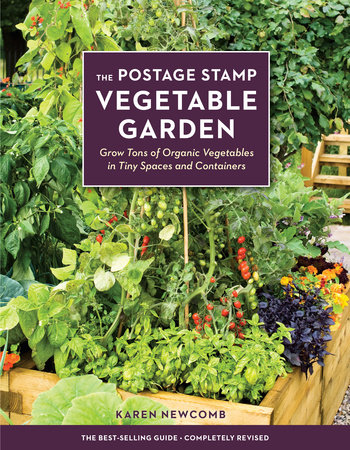
The Postage Stamp Vegetable Garden, Book Review


The Postage Stamp Vegetable Garden 
by Karen Newcomb

N.B. I received this book from Blogging for Books in exchange for an honest review.

From the moment I saw this book, I knew I had to have it. I love vegetable gardens, and I only have a very tiny space, a flowerbed actually. While this book doesn’t specifically address flowerbed vegetable gardens, everything in it applies to what I’m doing and shows me how to have a more productive garden.

The book begins with a wonderful historical overview of postage stamp gardening before getting down to the nitty-gritty of the process. Perhaps some gardeners aren’t as interested in the history of gardening, but I love knowing that these techniques have proved tried and true since the 1890s.
After introducing small space gardening, the author lays out raised bed options and vegetable arrangements for everything from 4’ x 4’ bed to a 8’ x 10’ bed (promising a minimum of 200 lbs. of fresh vegies and herbs from a 5’ x 5’ bed.) The layouts are not only well thought-out but also aesthetically appealing. 

Having discussed the physical arrangements of the garden, the book details soil amendments, watering, disease/pest control*, and how you can possibly grow vining vegetables (even melons) in such a small space. Finally, the author explains which plants are best planted next to each other in order to encourage healthy growth and productivity.

I’m very excited about this book! It has shown me how to alter my gardening techniques to radically increase the amount of food I can raise in an extremely limited area.

As for buying the book, don’t think twice. Buy it! You’ll be glad you did.


*The methods in this book are organic. Even if you don’t do organic gardening, this is still a great book that will cut down on the use of fertilizers and pesticides using simple techniques.

Wednesday, April 8, 2015

The Paris Wife Book Review


The Paris Wife book cover.jpg 

The Paris Wife by Paula McLain.

After reading this book, it took some time before I could write a review. I had think about the book, to divorce the author from the subject. The story of Ernest Hemingway, his first wife Hadley Richardson, and the rest of the Lost Generation was so sad and demoralizing that I wanted to give them three stars. (And those three stars was the average of their lives balanced by their work.) But this review is not of those authors.

Ms. McLain does such a beautiful job of disappearing behind the text that it’s easy to forget that Hadley, who narrates most of the novel, is not the author. The writing is very clean and does a wonderful job of conveying Paris during the ’20s, especially its literary atmosphere rank with competition, self-destruction, and betrayal. And yet, you can’t help but root for Ernest and Hadley, even knowing the inevitable outcome.

After reading this book, I have to read A Moveable Feast and The Sun Also Rises. I suspect that there’s no greater accolade for the author than to have enchanted a reader so much that she feels compelled to read more Hemingway.

Excellent book!

Friday, August 31, 2012

Shy Writers and Big Girl Panties


Yesterday, I emailed a group that reviews books, asking them to consider reviewing Screwing Up Time. I’ve known about the group for a long time. I’d had them bookmarked for almost as long. But I never asked for a review. Not until I asked myself “why.”

Or a better question would be “why not.” Here’s my dialogue with myself:

Bold me: Why not ask for a review?

Shy me: Uh, I’m an introvert by nature. The idea of drawing attention to myself is anathema.

Bold me: As a writer, whether self or traditionally published, you don’t have that option anymore. Next excuse.

Shy me: What if they hate my book?

Bold me: The book has some great reviews. It was an ABNA quarterfinalist and a Publisher Weekly reviewer liked it.

Shy me: Someone might still hate it.

Bold me: So? Suck it up, girl.

Shy me: They might never even look at it. They have so many other books. They only review books they’re interested in.

Bold me: And your point is….

Shy me: I don’t know.

Bold me: Honey, “put on your big girl panties” and send that email. (You gotta love those Southern phrases.)

Shy me: Okay, I’m emailing right now.


BTW, if you'd like to find out the title for the sequel to Screwing Up Timeclick here to find a game that gives you the answer

Monday, February 13, 2012

You Had Me With Chapter One


Even though I have a stack of to-be read books, I decided to borrow a book for my Kindle from the library. (Mostly because I was sick and a lot of my to-be reads are books written by people I know and I don’t want to read their books with “sick brain.”)

I was looking for a thriller. I like the slow burn type, where the tension permeates and builds on every page even as the violence hangs on the periphery, waiting to pounce. (A five star example is Sister by Rosamund Lupton.) But being that I had sick brain that is not the type of book I borrowed. By mistake, I ended up borrowing a cozy, i.e. a mystery where the violence takes place off stage. I like mysteries, but aside from Agatha Christie, I don’t like cozies. Especially cozies that try to be funny. I’ve tried to read several of them, but they strike me as trying too hard, like a faux Noel Coward play that doesn’t quite hit the arch irony that undercuts the words. And so I never finish them.

Anyway, I downloaded the book and read the first two chapters. And I realized that it was a “funny” cozy, but I didn’t return it. I was hooked. And I read the entire book in less than 24 hours.

I’m a strong believer in reading outside your genres (those that you normally write or choose to read). I think they’re great opportunities, at least for me, to discover what it is that will pull me through a book in a genre that I don’t normally read. BTW, the book is Sick of Shadows by Sharyn McCrumb. What kept me in this book when I could’ve easily returned it and gotten another book from the comfort of my couch was that I fell in love with the main character. She had a witty, sardonic voice, which sometimes annoys me if the character uses everyone else as a butt of their own private jokes. But in this case, the author acknowledges that arrogance and undercuts it by showing the character’s own weaknesses and having her acknowledge her own failings. Clever. I really liked the MC’s relationship with her brother, who doesn’t even appear until the end of the book. The author establishes the relationship with letters that the MC writes, which the brother doesn’t answer—though the MC sometimes “answers” for him along the lines of “I know you’ll say...” and thus establishes the missing brother, his relationship with the MC, and his character—he loves his sister but hates weird family obligations. Also clever.

The bottomline: Will I read the next book in the Elizabeth MacPherson series? Probably. I really want to find out if Elizabeth falls for Milo, the hot archaeology grad student. And I need to know if Elizabeth will marry first and claim the inheritance of her crazed aunt, who promised her fortune to whomever of her nephews and nieces marries first. And you’ve got to love a series with a crazed aunt. As PG Wodehouse says, “It is no use telling me there are bad aunts and good aunts. At the core, they are all alike. Sooner or later, out pops the cloven hoof.”
Friday, September 23, 2011

Book Reviews


One of the scariest things about being an author is book reviews. I had no idea.

A lot of reviews are unanticipated—the ones that show up on Amazon. Of those, there are the fun reviews, written by friends who aren’t writers, but read your book and loved it. Of course, an odd moment inevitably follows when you realize that they’re shocked that you could have written it and you wonder how much of a loser they think you are. But you let it go because you realize that they loved you even though they thought you were a loser, which is very cool.

Back to reviews. There are reviews written by strangers—they are the ultimate authorial experience. A complete stranger falls in love with your novel. Total rush. And, of course, there are the total loon reviews (thankfully, I’ve been spared these so far), where someone, who is most likely a sadist, decides you and your book are an appropriate punching bag. Not much you can do about those reviews except hope said person gets struck by lightning—just kidding, sort of.

Then there are the reviews you anticipate. Where either you ask a reviewer to consider your book or a reviewer contacts you and says they will be reviewing your book. These are wonderful opportunities. But too scary. (Talk about stress dreams.) You can’t help but wonder, what if my novel has spinach between its front teeth. Just because no one has noticed it thus far doesn’t mean it’s not there. Or what if this reviewer doesn’t connect to my main character or my plot or my voice? Those things happen.

A week or two ago a reviewer told me that she’d be reviewing Screwing Up Time. Yesterday, I got an email saying that she really enjoyed it. PHEW! I wanted to throw a party and dance around the house. Instead, I emailed my writing buddies, told my husband and sons (“That’s nice, Mom”), and made my daughter read the email on my laptop screen. So my blood pressure has returned to normal, that nervous twitch near my eye has disappeared, and I’m becoming more certain that my novel doesn’t have spinach between its teeth. At least, I’ll be convinced until I’m waiting for the next review.

Two Notes:

1. When the review and an author interview come out at the end of the month, I’ll post a link.

2. A big congratulations to Lydia and KO, who both signed with literary agents!!!