Tuesday, November 24, 2015

The Tsar of Love and Techno

Having read and enjoyed A Constellation of Vital Phenomena by Anthony Marra, I was eager to read his next book The Tsar of Love and Techno. I appreciate Marra’s beautiful yet spare style and am fascinated by his exploration of the Russian-Chechen war.
This collection of interconnected short stories treads the same war-ravaged ground, with a foray into a Siberia and its post-gulag life including surreal details like a faux forest littered with the dead and a chemical lake holiday.

Much of what I enjoy about Marra’s writing is on display in these stories. His ability to redeem tragedy (though he is not adverse to steal away some of that slim hope) through the lyrical use of language, to give it beauty, is on display in the first few stories. In particular, the story of the censor was exquisite.

However, the stories in the middle of the book were very gritty. The language itself lost some the beauty it had possessed earlier. And while this is likely the author’s intention as much of this section takes place during the Chechen war with all its attendant absurdities and horrors, it was very difficult to read as it felt like a descent into a nihilism.

While I think that the author achieved the lofty literary goals he set for himself in this book, it’s not the type of book I would chose to read again. Still, I would recommend this collection to those with a strong love of literary fiction and an understanding of its goals and ideals.


N.B. I received this book from Blogging for Books in exchange for an honest review.

Monday, November 23, 2015

Grading by Chunkage


My youngest son Matthew is a sophomore in college. Because he has a college scholarship (covering tuition and books), he is required to maintain a very high GPA. So he’s always concerned about his grades and always he knows exactly what his grade is. Or at least he did. Until he took physics.

His physics professor will remain nameless (though I think he’d be an interesting addition to a dinner party) to protect his innocence. Or guilt.

After the first exam, Matthew went to his prof and said, “Uh, I think there’s an error with my grade. I got 106.25%, but you marked it as 102.99%. (Apparently, even hundredths are important.)

Prof: That’s not an error.
Matt: But I got a 106.25%.
Prof: But everyone else did badly. The average was a 56.7%. So I put everyone’s grades through a normalizing algorithm. And since you got the highest grade, you lost the most points.
Matt: Oh…
Prof: Yup.

Matt complained long and loudly. At home. (Technically, lots of other people got his points.)

Now it’s the end of the semester and Matt is calculating what grade he needs to get on each of his finals to get As in his classes. Then, he portions out his study time on the basis of those calculations.

Normally, this is a straightforward set of calculations. All the chemistry and math professors have data available explaining the weights and percentages of each test and what scores they consider A, B, etc. Not physics.

In preparation for the final, the prof explained his grading system while Matt cringed and mentally called down imprecations on all persons/things physics-related.
Prof: After the normalizing algorithms, I construct a histogram of all the grades. Then I look at the histogram, considering the chunks. I say, ah, this looks like an A chunk, this looks like a B chunk, etc.

When Matt told me, I (being exceptionally amused) said, “So your prof grades by chunkage?”
Matt: No. My prof is blowing chunks.


I wonder if Matt’s going to have this same professor for the second semester of physics…

Thursday, November 19, 2015

Veggies, DIY Doors, and Sunsets.

I'm almost halfway through the read-aloud edit of my latest novel. My goal is to have it finished and sent to beta readers before my daughter's surgery. (If you remember last May, my son had cardiothoracic reconstruction. My daughter also needs the procedure. Only hers will be a more invasive reconstruction. I know, it's hard to imagine anything more invasive.)

Besides editing, I've been doing some other things. Do you remember my Postage Stamp Garden? Well, it's mid-November and I'm still harvesting! (Though not in the quantities I was earlier in the season.) Here's some fruits of garden.

Bell peppers, jalapenos, ghost peppers, basil, and burgundy cherry tomatoes. Yum!
And since I'm never without a DIY project. Here are some photos.


I was going to paint the door on the left. But during some preliminary sanding, the paint began coming off in hunks and I had to start scraping. FYI to the previous owners of the house, you can't throw some latex paint on a solid mahogany door and think everything's going to be okay, i.e., latex on top of of oil isn't going to work. Ever.

In any case, on the right is the finished door to my office. And yes, you do see double-shelved stacks of books. (But no judging.)


And coolest thing of all, my dad found a strange, huge cocoon on a river birch tree in his yard. After a Facebook plea, we discovered that it's the cocoon for a Polyphemus moth, which has a six inch wing span. So we're going to put it in an empty aquarium and we can't wait to see it break free.


One last picture to share. Sunday evening on the way to church, we came over the ridge and were treated to this amazing sunset. And, of course, all I had was my cellphone and the photo quality doesn't do the sunset justice. (Sorry the photo is blurry. Traffic was whizzing past.)


Friday, November 6, 2015

Asterisk Edit and Aunt Sophie's Cigarettes


I’ve been busy. I finished a writing assignment that I’ve been working on for months, and I finished my new novel’s asterisk edit.

This is probably the first time you’ve ever heard of an “asterisk edit.” Because I made the term up. 

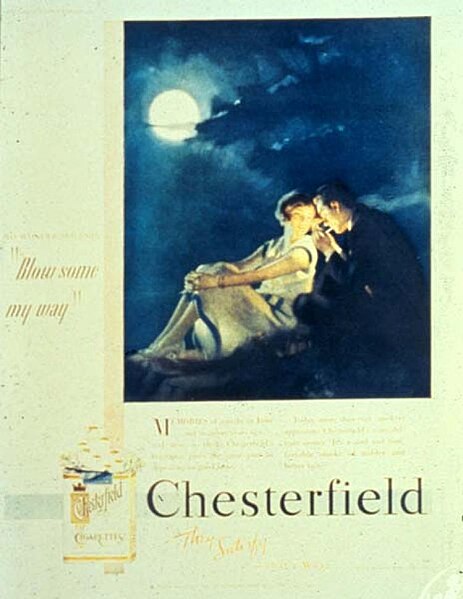
File:Blowsomemyway.jpg
"Aunt Sophie," courtesy of Wikimedia Commons.
Here’s how it works. You’ve just finished your first draft of your latest novel. You celebrate (or weep). Likely both. Celebrate because “Hey, the first draft is finished!” Weep because a first draft is a celebration of everything that can go wrong on a page…and now you have to fix it.

You begin to edit. You fix, rewrite, rearrange, etc. But sometimes you’re not sure. You need a beat in certain spot but you’re not sure what type. Or something is wrong with a scene opening, and again, you’re not sure what. Or you think you already dropped a clue about Aunt Sophie’s fling in Paris in the ’20s, but you don’t know where. Or you need to verify a fact on Google. All of these things can really slow down your first edit—because spending an hour trying to figure out what brand of cigarette Aunt Sophie would have smoked in Paris is going to take you out of the plot and voice. When I run into something like that, I stick in a single asterisk into the text and leave myself a note in the text in parentheses. Then, I plow ahead.

After the grand first edit is complete, I begin the asterisk edit. Using the “Find” feature of Word (far right side on the top of the tool bar under “Home”), I type in an asterisk and Word will bring up all the asterisks I added to the manuscript. One by one, I deal with each asterisk, until they are all gone. Sometimes I can do a dozen asterisks a day. Sometimes one—it took several hours to discover Aunt Sophie may have rolled her own cigarettes.

For my current manuscript, I had 71 asterisks—in a document that is currently 75,000 words. Not too bad.

By the end of the asterisk edit, the novel is in decent shape. I’ve patched the plot holes, added in beats, and verified all historical issues. The next step is the voice edit. But that’s another post.

Anyone else have special types of editing passes?

Wednesday, October 7, 2015

DIY Cloche Hat

If you’ve been reading my blog for a while, you may remember that I was diagnosed with a rare auto-immune disease (alopecia areata) over a year ago. As far as auto immunes go, the one I have isn't a bad one. My immune system attacks my hair follicles and my hair falls out. It’s not bad for body hair, but not so nice when it’s hair on your head, eyelashes, etc.

Almost two years ago, I began treatment, which ended up being a series of 40 to 50 shots in my scalp every six weeks. Not fun. (And, eventually, insurance decided they didn’t want to cover the shots.)

But the shots weren't very effective, so my doctor switched me to an oral medication and topical steroids. The combination seemed to work. (Either that or I went into remission.) Now, neither is the case. I’m losing a lot of hair again. Maybe it will come back. Maybe I'll lose more.

Since I believe in preparing for the worst, my husband suggested I sew a hat. He even offered to go with me to the store, so I could buy fabric. (FYI, Calvin feels that the fabric store is a circle of the Inferno that Dante forgot to include. So when he offered to go with me…love endures all things.)

Here is the result of the purchases. 

The pattern for this cloche hat (Rosabelle), courtesy of sewmamasew is by Wendy Talene of Elsewhen Millinery. I decided to sew a hat rather than buy one because 1. It’s cheaper. 2. I have a rather large head—and if a hat doesn’t fit right, I get migraines.


After completing the hat, I would highly recommend this pattern. The instructions were very clear (unusual in patterns and highly unusual in patterns outside of traditional pattern makers). Also, the fit was perfect because the pattern includes very specific directions on how to choose/cut a size.

(One small caveat, I didn’t realize that pieces B1 and B2 were supposed to be taped together before cutting. Thankfully, I had extra fabric.)

Also, the pattern gives very specific directions if you chose to sew a hat from difficult or non-traditional hat fabric—stretch materials, linen, etc. Perfect for those of us who like to sew outside-of-the-box.

One final note, this pattern comes with instructions on how to make the most beautiful roses to add to the hat. I’m in the process of doing that using dark red/black taffeta. (I’ll update when I’m finished.) But I made several hat bands (including this black velvet with embroidered rosette), so I can interchange them based on my mood, occasion, etc.

And, yes, I will be buying another pattern from Elsewhere Millinery. The Kimberly in crushed velvet is calling my name for the holidays. (Also, the pattern author does make custom hats, so if sewing isn’t your expertise, you can still wear a beautiful hat.)

Elsewhere Millinery patterns gets a five star review from me!

Wednesday, September 30, 2015

18 Books to Fall In Love With This Autumn

File:Carlo Dolci - St Catherine Reading a Book - WGA06372.jpg
St. Catherine Reading a Book by Carlo Dolci, courtesty of
Wikimedia Commons.
Autumn is one of my favorite seasons. Leaves turn yellow, orange, and red and give the light a pink cast. Besides walking in the chill wind (which hasn’t arrived here yet—it’s almost October and it’s still hitting 80), I love reading next to a window where the pink light spills on the pages of the book and I can sip hot cider.

If you’re looking for some great reads this fall, here are some recommendations.

(Please note, some of these books contain adult situations and/or language. If you don’t like something, skip it.)

Hurry Up and Read This Before The Movie Comes Out: The Martian by Andy Weir.

Upmarket/Literary Fiction: A Constellation Of Vital Phenomena by Anthony Marra, The Kite Runner/A Thousand Splendid Suns/And the Mountains Echoed By Khaled Hosseini, The Swan Thieves by Elizabeth Kostova

Thrillers: Gone Girl by Gillian Flynn, The Girl on the Train by Paula Hawkins (Note these first two books don’t have sympathetic main characters.) The Expats/The Accident by Chris Pavone, Until You’re Mine by Samantha Hayes, The Vanessa Michael Monroe series (The Informationist, The Catch, The Mask, etc.) by Taylor Stevens, Big Little Lies by Liane Moriarty

Spy Thrillers: the Gabriel Allon books by Daniel Silva (The first one is called The Kill Artist).

YA: Code Name Verity by Elizabeth Wein (excellent book, even for adults), Marissa Meyer’s Lunar Chronicles: Cinder, Cress

Romance: (I don’t usually read romance. But I got this novel to review “by accident,” and it was quite good): The Little Paris Bookshop by Nina George

Fictionalized History: The Paris Wife by Paula McLain (about Ernest Hemingway’s first wife.)

Non-fiction: The Plantagenets by Dan Jones

Theology: Newton on the Christian Life by Tony Reinke (a distillation and explication of John Newton’s pastoral letters.)


Wednesday, September 23, 2015

Velvet Purse for a Writing Break

The last two weeks, I've been taking a break from my newest novel. (Though not from writing as I had a writing deadline approaching and needed to get my work to the editor.) I finished the first major edit of the novel and wanted to recharge before Edit, Part 2.

So I'm doing some needlework and sewing. I posted photos of a hand towel I embroidered last week. And I finished sewing a purse.


I used this pattern several years ago to make my son Matthew a set of black faux snakeskin gauntlets. And at the time I was intrigued by the "man bag" in the lower left corner. I thought it might make a lovely purse.

Recently as I was sorting through my bins of remnant fabric, I came across some chocolate-colored velvet and remembered the pattern. Of course, as I read through the pattern, I didn't like some of the construction--I didn't want to have to untie and tie a bow every time I opened my purse and I didn't want to have a belt strap on the top of the purse. So I re-engineered the pattern.

The finished project is below. I ended up using elastic cording as a drawstring closure, threading it through tiny buttonholes.  I added a tassel because the weight of the tassel keeps the flap of the purse closed. Also, the rounded trim was not cut on the bias. I cut it with the grain to give more shape to the flap without having to use stiff interfacing, which would make the seams bulky.

Now I'm waiting for the weather to change so I can start using the purse--velvet doesn't make sense in 80 degree weather.