Friday, November 30, 2012

Winter Wonders!

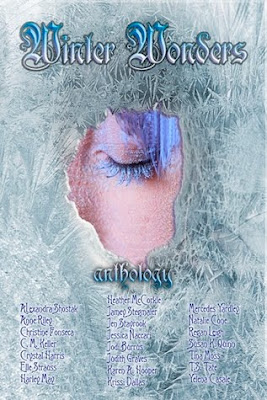
Saturday is a big day. It's the release of Winter Wonders, a winter themed anthology of short stories published by Compass Press and recommended for those aged teen and above. "Screwing Up Mongolia," a Screwing Up Time short story, is one of the stories included in the anthology.

The story is set in the time between Screwing Up Babylon and book three of the Screwing Up Time series. And, of course, the story has Mark (Henry) and Miranda in it.

Here's a link to the e-book version, which is selling for $4.99 at Amazon.
Here's a link to e-book at Barnes & Noble, also selling for $4.99.
And one final link to the paperback version, which is selling for $9.99.


One more bit of information, all the proceeds from the anthology go to Literacy Inc., an organization that teaches teens the importance of reading and offers them a chance to win  a free college education.

All Proceeds Go To Charity!

Wednesday, November 28, 2012

My Characters are on Strike


I write by the seat of my pants. That means I write with only a vague notion of where I’m going and how I’m getting there. I’d prefer to write another way—I’d like to be a plotter, someone who plots out their entire novel and all subplots before they put pen to paper. That’s the way that I live the rest of my life. Everything is planned, organized, and collated.

Now I am addicted to the creative rush, which happens when the plot finds me. When something or someone I hadn’t thought of takes over the story. That’s euphoric. But there is a dark side. Times when you have no idea what happens next.

Those times I round up my characters to have a cast meeting. I greet them cheerfully. They turn sullen faces to me. The problem with being an author is you dump your characters into really bad situations, and, well, they hold it against you. So when you ask them for a favor, they aren’t exactly cooperative. More like bitter. And blackly sardonic.

So now I’m in that dark place. My text has stopped flowing, and my characters are on strike. Right now, I’m trying bribery. I’ve tried dangling a kissing scene with Miranda under Mark’s nose, but he ignored that. I’ve offered him a taser and that got his attention, but so far he’s only eyeing it with his arms crossed over his chest.

We’ll see what happens. The taser is shiny and packs a nasty punch. But if that doesn’t work, I’m open to suggestions. What do you think might get my characters back on track?

Monday, November 26, 2012

I Should Go to Grad School


Two of my kids are graduating from college in the spring. So, they’re in the process of applying to grad school. (Luke in chemistry, and Ariel in math.)

So they’ve been working on everything from personal statements, which are the equivalent of why-you-want-me-in-your-program, to curricula vitae, which is everything-I’ve-ever-done-that’s-vaguely-relevant to why-you-want-me-in-your-program. And, of course, they’ve taken the GRE.

And they’ve been getting emails. Luke’s are from chemistry departments. Ariel’s getting spammed. Recently, she got an email from the University of Colorado encouraging her to apply to their Quantitative Biology program. She said, “Shoot me now,” even though they were offering buckets of money. Matt said, “Does that mean you’d be counting sheep?” Ariel moaned about another program wanting to use her for her math skills. As a parent, that doesn’t sound so bad to me—not when there are buckets of money involved. I wish someone would want to use my mad math skills.

Lately, Ariel’s been getting lots emails from engineering programs. They all start, “Congratulations on your interest in graduate engineering.” She now talks back to the spam—“I never, ever said I was interested in engineering.” I said, “Well, at least, they don’t want you for your math skills. They want you because you’re a girl. Diversity.” I wonder if they’d give her buckets of money. Maybe I should apply to grad school. I could do Quantitative English. I’d love to be paid to count poems.

Monday, November 19, 2012

Beware What You Can't Read


Saturday night, I decided to sort through the bathroom cupboards, I threw away bottles of old, thick nail polish, expired makeup, etc. And then, I found a jar of face cream that I’d been given. I don’t usually wear face cream or lotion. My skin is really sensitive, even soap can burn my skin. But the face cream smelled really nice.

Still I’m not completely stupid, so I asked Ariel to read the minuscule list of ingredients, checking for anything nasty. Even with my reading glasses, the list was unreadable—you’d need a magnifying glass. (If I’d been really smart, I’d have asked my chemist son, but he wasn’t here. So I asked the math girl.) She said, “Most of the ingredients end in ‘-cone.’” Ah, silicone derivatives. No problem. I smoothed the cream on. It felt like silk.

Then, I went to bed. Big mistake.

When I woke in the morning, I dragged myself into the shower. It seemed odd to me that the water hurt my face. But, whatever. I glanced in the mirror afterwards, but it was fogged.

At breakfast, once hot coffee was coursing through my veins, I touched my cheeks. They were really hot. I asked the kids, “Is my face red?” They said, “Yes.” Ariel added, “Uh, you should look in the mirror.”

So, I did. Not only were my cheeks red, my entire face looked like it had been sunburned. I could tell you it looked like a sun-kissed glow. But it wasn’t. It was burned.

I ended up smearing some zinc oxide on my face with a thick coat of foundation. And either it worked to cover the burn, or the people at church were nice enough to ignore it. I did keep fanning my face, which was really hot. But not in a good way. 

Friday, November 16, 2012

Riding the Bestseller Wave


A strange thing happened on Wednesday and Thursday. My YA novel shot through the ranks at Amazon. I found out what it’s like to ride the crest of the wave.

Ever since I first published Screwing Up Time, I’ve been trying to market it on a shoestring budget. When other authors said, “My budget for this novel is $5,000,” I said, “My budget for this novel is 5 bucks.” And I was okay with that.

But it’s very hard to get the word out when you don’t have a megaphone. Still, my efforts paid off and I broke small sales barriers. And I was/still am very thankful. Then, I found E-Reader News Today. And they were willing to advertise my novel (given it had enough good reviews and I was willing to sell it at a bargain rate—99 cents) for a part of the royalties. I figured it would be a win-win situation. If the book did well, I’d get a lot of exposure. If not, I wouldn’t have lost a big investment. So I submitted my book.

I hoped and prayed for the best, but kept my expectations very low. The site warned me that YA books aren’t the biggest sellers in the e-book biz. (I already knew that.)

Wednesday came around. I had a couple of sales. Good. By afternoon, I had a few more sales. By evening, I was pretty excited. The sales were really coming in. And by Thursday morning, Screwing Up Time was ranked #6 in Amazon Kindle’s Teen Literature and Fiction. It was only two spots below The Hobbit!

It was the most amazing feeling. People were interested in my book. I had my techo-son do a screen capture so I could savor the moment later because I knew it wouldn’t last. And it hasn’t—this morning my book has slipped to #15, which is still amazing. And the sales are still very good. Who knows what will happen today—Fridays are much better sale than Thursdays. But even if I slide down the charts, that’s okay. For a moment, my book was on the top of the charts. 


Wednesday, November 14, 2012

Epic Battle of Cultural Neuroses


The other day I purchased a battery powered, hands-free soap pump. I had sneered at these in derision only weeks ago because I thought they were overpriced, faux-tech gizmos. Then, I needed a new hand soap container.

Yes, I know I can get a cheap Softsoap pump with soap in it. But they’re small, and we are big hand washers in our house. Even with extra large soap containers, I have to refill them once a week. (Remember my ethnic background is Dutch. Even the Pilgrims when they were living in Leiden said, “The Dutch clean things before they’re dirty.”) So, while I’m cooking, I wash my hands numerous times, especially with chicken. Cal thinks I’m a bit neurotic—he’s wrong. And as proof of this fact, no one in our house has ever had food poisoning.

The other problem is the extra large soap pumps break easily. So I found myself at WalMart (ugh) pricing new pumps. The price of a massive pump and hands-free pump were the same. So, of course, I bought the hands-free—no more pressing the pump with my elbow to avoid getting raw chicken liquids on the pump.

Everything was going along swimmingly. Until the hands-free pump got some water spots. I tried to clean it. And it dispensed soap all over me and itself.

Very carefully, I wiped the extra soap and water spots. And it dispensed soap again. At this point, Cal burst into laughter. What would win in my battle with the soap container—the need to be clean or the need to be thrifty. Cal settled in for the epic battle of cultural neuroses (it’s not neurotic though, just saying).

But then, to Cal’s chagrin, Ariel said, “Hey, just turn off the switch, and you can clean it.” So, I did. Of course, I should’ve known. I turned on the switch to begin with. 

Here's a photo. I got it for $6 at WalMart. Soap was extra.

Monday, November 12, 2012

Guest Post: Elements of Voice

Today I'd like to welcome Laurel Garver to the blog. She writes the blog "Laurel's Leaves" and is the author of the recently released novel, Never Gone. (NG has just made it to the top of my Kindle TBR list, and I can't wait to read it.)

Elements of Voice

Sometimes the term “voice” is used interchangeably with “style.” What I’d like to talk about is not that sense of “authorial voice,” but rather how to develop character voices that are distinct from one another. If you write from multiple points of view, this is an essential craft to learn. But it’s also helpful for making sure that your fiction isn’t one-note and that the characters around the protagonist seem just as unique as he or she does.

Diction 
How do the characters say what they say? This will reflect their levels of education, local dialect and to a degree their temperament. A morose Oxford graduate will have a different manner of expressing himself than a scrappy graffiti writer from the Bronx.

Here are a few examples from my novel Never Gone. Can you guess which is the teen from New York, which is her middle-aged British uncle and which is her grandfather from central Pennsylvania?

-- “Your mother ain’t right in the head, seems to me. When you love someone, you can’t throw it away. You hang on with every ounce of strength. Right?”

 -- Cecily bubbles with fake cheer, no doubt trying to make up for being such a grinchy wench to me lately. She tells a dorky story about crushing on Ollie Mawbry, and her little horse-riding escapades to spy on him. No surprise he ignored her. Guys don’t exactly dig stalker chicks.

-- “It’s good of you to take an interest in Liza’s pony,” he says. “She’s always banging on endlessly about him. It’s hard for us to be enthusiastic anymore.”

Notice the use of cadence (speech rhythm) and key terminology. You immediately get a sense of place from “ain’t” and “banging on.” You get a sense of age from “right in the head” and “stalker chicks.”

Developing varied diction comes from doing lots of research. A few places to start: Keep a log of overheard conversations and transcribe speech from YouTube videos. Beware of taking your cues from TV, film or other novels, because those writers may not have worked from life. Go to the source as much as you can.

 Associations 
These “tip of the mind” thoughts are a huge part of character voice because they tell a tremendous amount about a person in just a few words. Think of the word-association games psychotherapists use. When your character hears the word “home,” does he think “fried chicken,” “fear,” or “fantasy”? Any one of these answers gives a window into an intriguing story. Associations can be a shorthand way of showing what kind of past experiences the character has gone through, what he values, and what forms of culture shape him. Associations show up in the way characters describe things, and especially how they make comparisons, such as similes and metaphors.

Here are a few associations at work from Never Gone:

--Images burst in my mind like sudden sun through stained glass. (association of a church-goer)

--“Crikey,” Uncle says. “We’re in Dante’s eighth circle of hell.” (association of a reader of classics)

Attitudes 
Attitudes are essentially value judgments made about elements of the world around us--what is good or bad, valuable or worthless. Attitudes most often come out when a character is confronted with something new, unusual or unexpected. The fireworks display is awesome or lame; the new teacher is nice or mean or airheaded or so cool; the flat tire is infuriating or just typical of my hopeless life. Look back at my first examples and you'll see strong expressions of attitudes. Danielle's grandfather finds fault with how her mother grieves. Dani herself is exasperated with her aunt's attempts to be cheerful. Dani's Uncle appreciates what he sees as her patient forbearance of his child, who he judges as repetitive.

Diction and associations will play into how attitudes are expressed, but by golly, all characters should have them. A character that never expresses an attitude will come off as emotionless, or perhaps on the autism spectrum. He’ll see fireworks and say “chemical explosions are causing light effects in the sky.”

Getting to know your characters beyond just age and occupation will help you develop distinct voices that engage readers and make your story come alive.

Which elements of voice come most easily to you? How might research help you create more distinctive voices for your characters?

====

Laurel Garver is the author of Never Gone, a novel about grief, faith and finding love when all seems lost. A word nerd, Indie film enthusiast and incurable Anglophile, she lives in Philadelphia with her husband and daughter.

Trailer for Never Gone


Add it on Goodreads. Read a sample chapter.

It is available as an ebook and a paperback at Amazon.com, Barnes and Noble, Kobo, Smashwords, CreateSpace.